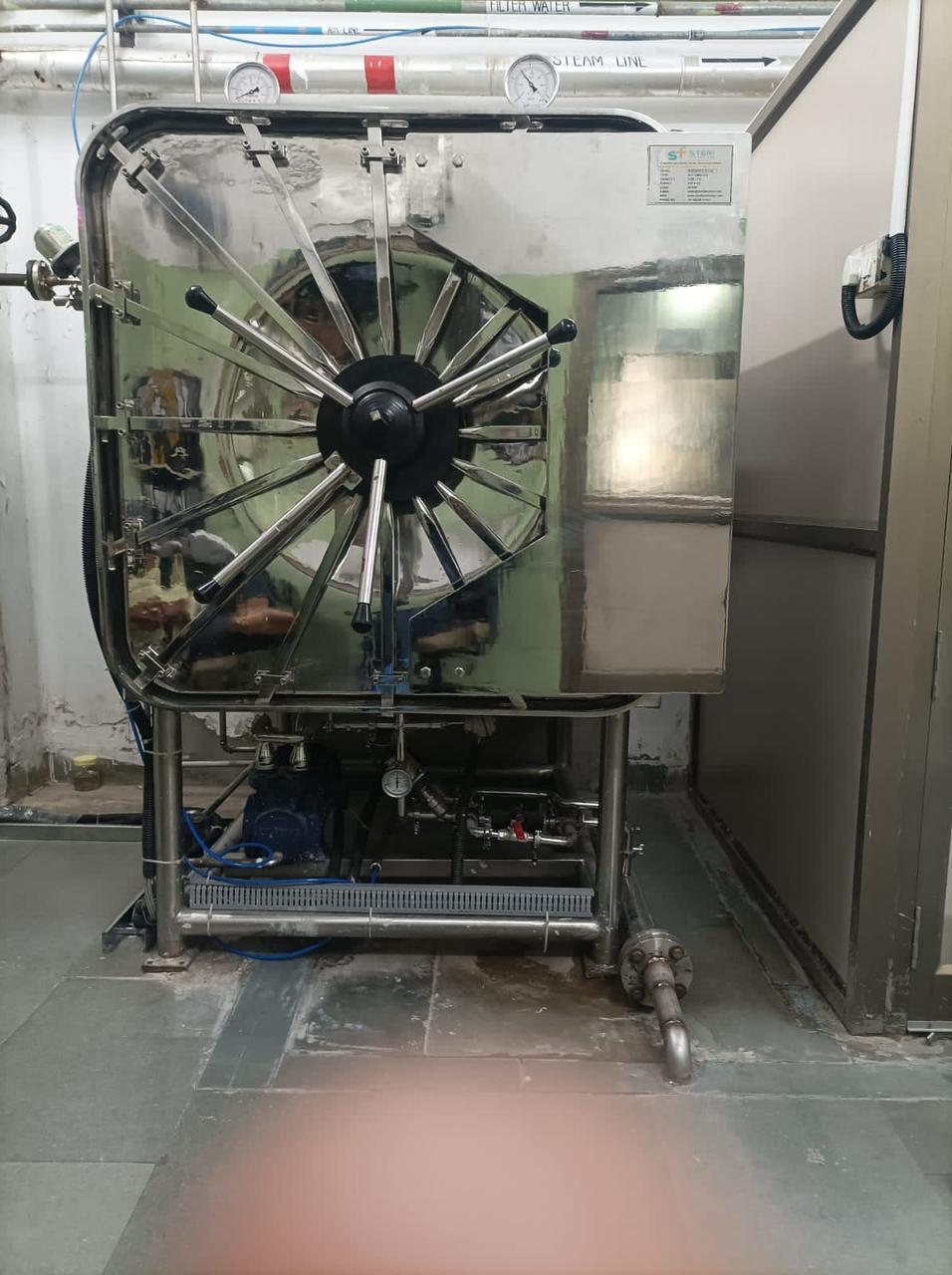
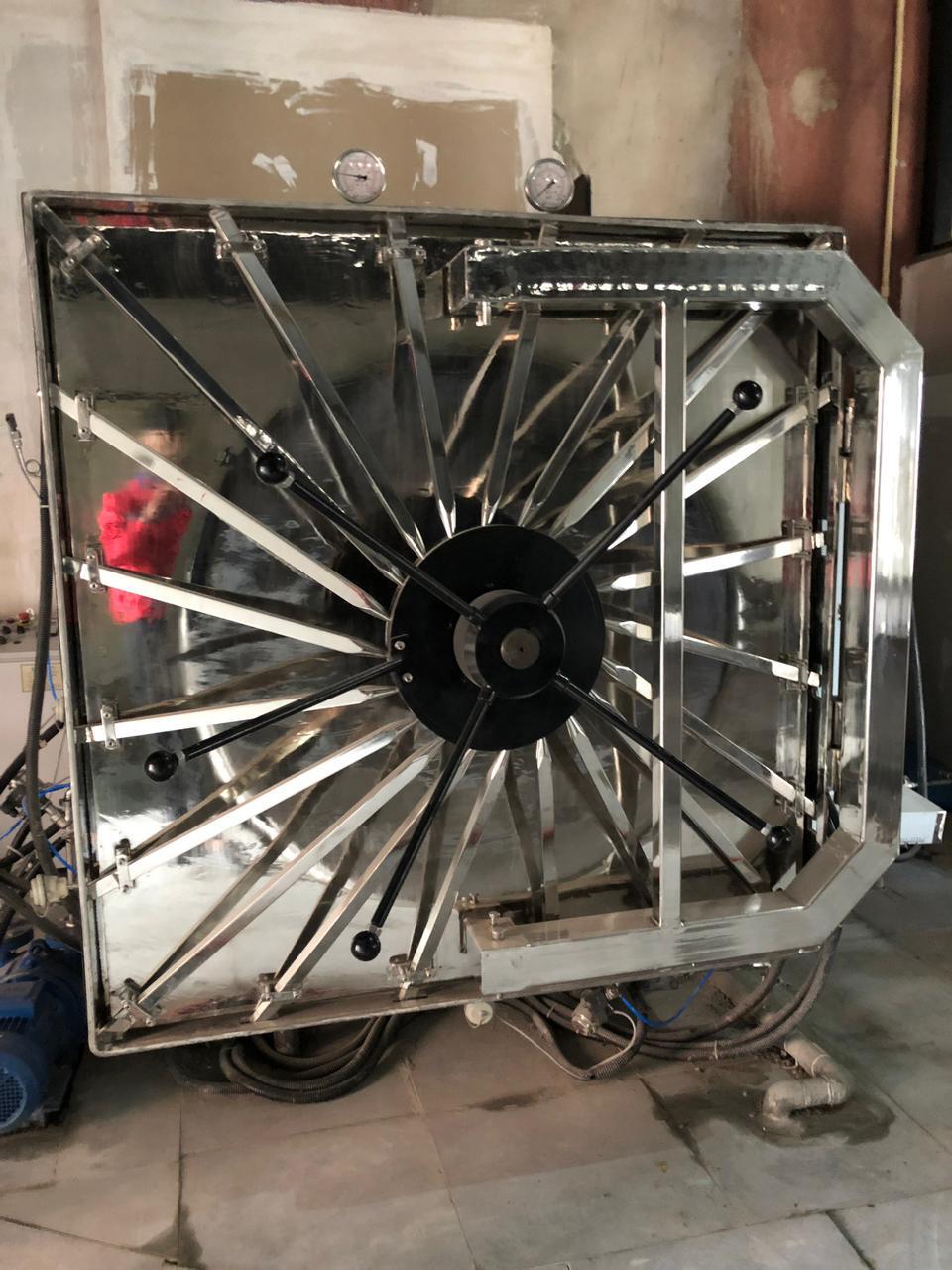
Laboratory Autoclaves is a stationary machine which is used to create different temperature and pressure conditions within a closed chamber for the disinfection of lab instruments. It is designed and developed by using premium quality stainless steel which imparts greater strength and rigidity. It can be used in various industrial laboratories in industries like pharmaceutical, chemical and many more. It is mounted on a rigid frame which gives excellent stability and sturdiness. This machine unit is also equipped with safety devices for the efficient functioning.
Laboratory Autoclave Application:
1. To assure the removal of any potentially hazardous bacteria, laboratory autoclaves are frequently used to sterilize equipment such as glassware, pipettes, and Petri dishes.
2. For sterilizing surgical tools, assuring their safety for use in various operations, and reducing the danger of infections, they are crucial in medical research institutions.
3. To preserve the integrity and safety of pharmaceutical goods, laboratory autoclaves are used in the pharmaceutical business to sterilize containers, vials, and other packaging materials.
4. Autoclaves are used in food testing facilities to sterilize tools, containers, and testing apparatus, maintaining the precision and security of food quality control operations.
Laboratory Autoclave Features:
1. Researchers may quickly establish and modify sterilization parameters using the Laboratory Autoclaves' user-friendly control panel.
2. These autoclaves include a large stainless steel chamber that offers plenty of space for sterilizing a range of laboratory supplies and tools.
3. The Laboratory Autoclaves have numerous levels of safety features built-in, including pressure and temperature sensors, automatic door locks, and a built-in safety valve. These features are all part of the design process.
4. These autoclaves provide quick and effective sterilization cycles, saving important time in hectic laboratory settings thanks to their cutting-edge heating and cooling systems.
5. Users may choose the best settings for various types of materials and applications thanks to the autoclaves' vast selection of programmed sterilization cycles.
FAQ:
1. How do I choose the right laboratory autoclave for my needs?
Ans: Choosing the right laboratory autoclave for your needs involves considering factors such as size, capacity, sterilization requirements, user-friendly features, and budget constraints.
2. How long does it take to sterilize items in a laboratory autoclave?
Ans: The duration of sterilizing items in a laboratory autoclave can vary depending on factors such as the size and type of items, desired sterilization method, and the autoclave's specifications, but it typically ranges from a few minutes to an hour or more.
3. Can a laboratory autoclave be used for glassware sterilization?
Ans: Yes, a laboratory autoclave can be used for glassware sterilization as it effectively applies heat and pressure to eliminate microorganisms and ensure the glassware is thoroughly sterilized.
Cath Lab ETO Sterilizer was created with the goal of effectively and completely sterilizing the equipment used in cardiac catheterization labs. To provide effective disinfection of sensitive tools and devices used in invasive cardiac operations, it includes the newest technology and safety features. The Cath Lab ETO Sterilizer makes it easy for medical professionals to operate thanks to its simple controls and user-friendly UI. To satisfy the exacting sterilization requirements needed in catheterization labs, the sterilization procedure is precisely calibrated.
Cath Lab ETO Sterilizer Features:
1. An intuitive touchscreen interface on the Cath Lab ETO Sterilizer makes it simple to operate and regulate sterilization cycles.
2. It has a large chamber with movable storage that offers enough room for storing different cath lab tools and equipment.
3. To provide secure and dependable sterilization procedures, the Cath Lab ETO Sterilizer is built with cutting-edge safety features including sensors and automated door-locking mechanisms.
4. During the sterilization stage, its cutting-edge ventilation technology efficiently eliminates dangerous gases, guaranteeing a secure working environment for healthcare workers.
5. The sterilizer's construction uses strong, high-quality materials to guarantee its long-term performance and dependability in challenging cath lab situations.
Cath Lab ETO Sterilizer Specifications:
1. Type of Sterilizer: Steam Sterilizer, Ethylene Oxide Sterilizer
6. Auto-Man: option of manual changeover in case of Auto system breakdown.
FAQ:
1. Is it safe to use the Cath Lab ETO Sterilizer in a medical setting?
Ans: The Cath Lab ETO Sterilizer was created to successfully disinfect medical equipment while upholding the appropriate safety requirements, thus the answer is yes, it is safe to use in a healthcare environment.
2. Is the Cath Lab ETO Sterilizer simple to use and understand?
Ans: Yes, the Cath Lab ETO Sterilizer is simple to use and intuitive, making it easier for medical professionals to disinfect medical equipment efficiently and with a little learning curve.
3. Does the ETO sterilizer for cath labs need any additional maintenance?
Ans: Yes, frequent cleaning, calibration, and service are needed to maintain the Cath Lab ETO Sterilizer's best function and extend its lifespan.
1. Chamber Design: Horizontal autoclaves have a horizontally oriented cylindrical chamber, allowing for easy loading and unloading of items. The chamber is typically made of stainless steel, which is durable and resistant to corrosion.
2. Door Mechanism: Horizontal autoclaves are equipped with a hinged door that provides access to the sterilization chamber. The door may have a manual or automated locking mechanism to ensure a secure seal during operation.
3. Control Panel: Autoclaves feature a control panel that allows users to set and monitor various parameters. The control panel may include a digital display, buttons, and indicators for setting temperature, pressure, sterilization time, and cycle options.
4. Heating System: Autoclaves use a heating system, usually electric or steam-based, to generate the necessary heat for sterilization. Electric heating elements or steam generators heat the chamber and maintain the desired temperature throughout the sterilization process.
5. Pressure and Temperature Sensors: Autoclaves are equipped with sensors that monitor and regulate the pressure and temperature inside the chamber. These sensors ensure that the sterilization conditions are met and maintained throughout the process.
6. Safety Features: Horizontal autoclaves incorporate various safety features to protect the operator and prevent accidents. These may include pressure relief valves, over-temperature protection, door interlocks that prevent opening when the chamber is pressurized, and alarms for indicating abnormal conditions.
7. Programmable Cycles: Many autoclaves offer programmable cycles to accommodate different sterilization requirements. These cycles can be customized based on the type of load, sterilization temperature, exposure time, and drying options.
8. Water Management System: Autoclaves typically have a water reservoir or a direct water connection for steam generation. Some models may feature an integrated water treatment system to maintain the quality of the water used for sterilization.
9. Drying Capability: Depending on the application, autoclaves may include a drying phase at the end of the sterilization cycle. This helps remove excess moisture from the sterilized items, improving their shelf life and reducing the risk of contamination.
10. Data Logging and Documentation: Advanced autoclaves may have built-in data logging capabilities, allowing users to record and store information about each sterilization cycle. This documentation is essential for traceability and compliance with regulatory requirements.
Frequently Asked Questions:
1. Can medical equipment be sterilized in a horizontal high-pressure autoclave?
Ans: A horizontal high-pressure autoclave is indeed made to use steam and high pressure to sanitize medical equipment.
2. How much pressure can a horizontal high-pressure autoclave produce at once?
Ans: The highest pressure that a horizontal high-pressure autoclave can produce varies based on the type and specifications, although it normally falls between 2 and 3 times atmospheric pressure.
3. A horizontal high-pressure autoclave has what kinds of safety measures?
Ans: To guarantee safe operation and prevent mishaps, a horizontal high-pressure autoclave often has safety measures such as pressure relief valves, temperature sensors, and door interlocks.
Ethylene Oxide gas acts as a sterilizing agent at required low moisture and temperature. It comes with excellent penetration power under desirable conditions. Ethylene Oxide sterilization is considered as an effective sterilization method. STERI TECHNO FAB is a renowned name in the field of ETO Sterilizer For Hospital and Medical Use manufacturing worldwide. The comprehensive ETO sterilization solution from our company comprises ETO sterilizer, Packaging Reels (Sterilization Reels) Indicator tape for ETO, EO gas cartridges and Indicators. The ETO sterilizer is offered in standard sizes as well as customized sizes, based on the customer requirement.
ETO Sterilizer For Hospital and Medical Use Features:
1. Chamber is fabricated making use of stainless steel 316 grade material.
2. Triple modes by which the machine can be operated are with 100 % EO Cartridge, with different mixtures of EO with CO2 and with EO cylinder.
3. SS Trolley that comes with the machine enables easier loading and unloading of material to be sterile.
4. There are Pre-Requisite sequence for running the cycle in automated mode, Pre-Sterilization phases for creating proper condition for sterilization and Post-
sterilization phases for eliminating residual gas from the material (Aeration).
5. Customers get five user defined cycles, like Cold & Warm cycles.
6. Inter locks at several stages are provide safety as well as ensure maintenance of apt parameters during the sterilization cycle.
7. Completely automatic with touch screen HMI and data recording, PLC based automatic as well as Semi-automatic models can be offered.
8. Password protection doesn't allow any unauthorized access.
9. Data records are provided in non editable data sheet and graph format.
10. Minimal operating cost.
11. Two models, table top and fully box cover are available.
12. Machine is maintenance free.
13. Power Supply: - 230 V AC (Single phase).
14. Manual changeover option in an event of automatic system breakdown.
FAQ:
1. How does a hospital and medical use ETO sterilizer operate?
Ans: Through a carefully regulated sterilization procedure, an ETO Sterilizer for Hospital & Medical Use penetrates and destroys bacteria on medical equipment.
2. How often should an ETO Sterilizer for Hospital & Medical Use be maintained?
Ans: Regular inspections, cleaning, and calibration are normally part of the maintenance routine for an ETO Sterilizer for Hospital & Medical Use, however, this might change based on the model and manufacturer recommendations.
3. Can all sorts of bacteria be eliminated by an ETO Sterilizer for Hospital & Medical Use?
Ans: Yes, an ETO Sterilizer for Hospital & Medical Use is capable of thoroughly sterilizing medical equipment by efficiently eradicating a variety of pathogens, including bacteria, viruses, fungi, and spores.
Buy from us compact and sturdy Instrument Sterilizer which is designed as per the medical standards that makes it suitable for laboratories and clinics of the killing of bacteria, viruses and other microbes present on the surfaces of the tools and instruments used within the facilities. It is highly popular and demanding due to its easy-to-use interface and controlled functioning. Buy from us this premium class sterilizer in large quantities at a reasonable and low price.
Instrument Sterilizer Applications:
As it guarantees the cleanliness and safety of surgical instruments used in medical operations, the Instrument Sterilizer is an invaluable tool for healthcare workers.
Hospitals and clinics may maintain high levels of cleanliness using the Instrument Sterilizer, lowering the risk of illnesses and cross-contamination among patients.
This gadget successfully eliminates bacteria, viruses, and other hazardous germs found on medical equipment using cutting-edge sterilization procedures, such as high-temperature steam or chemical sterilization.
Healthcare institutions may use the Instrument Sterilizer to adhere to stringent sterilization processes and legal regulations, assuring the general safety and well-being of their patients.
An essential part of every operating room or dentistry office is the instrument sterilizer.
Instrument Sterilizer Features:
The instrument sterilizer's small size allows for practical placement anywhere in a hospital or lab without taking up a lot of room.
It guarantees accurate and dependable sterilization temperatures with the use of contemporary temperature control equipment to deliver excellent performance.
The sterilizer's interface was carefully created to be user-friendly, with clear displays and straightforward controls that make operation and monitoring simple.
Its adaptable sterilization technology can efficiently sterilize a variety of medical equipment and devices.
The instrument sterilizer also provides a wide range of built-in sterilization cycles, enabling users to choose the cycle that is best for their particular instrument type and level of sterilization needs.
The apparatus quickly reaches the required sterilizing temperature because of its powerful heating element.
FAQ:
1. What are the typical dosage rates for pH correction chemicals?
Ans: The typical dosage rates for pH correction chemicals vary depending on the specific product and the desired pH adjustment, so it is recommended to follow the manufacturer's instructions for proper dosing.
2. Does pH correction chemical have any side effects?
Ans: pH correction chemicals may have potential side effects such as skin or eye irritation, so it is important to follow safety guidelines and use proper protective measures during handling and application.
3. Can pH correction chemical be used in agriculture?
Ans: Yes, pH correction chemicals can be used in agriculture to adjust the pH levels of soil or water for optimal plant growth and nutrient uptake.
50 mm thick fiber glass wool with aluminum foil and SS 304
PLC
Siemens Make
HMI With USB Port
7 TOUCH SCREEN Proface/Weintek MAKE or equivalent
Switch Gears (Mcb,Relays And Other Switches)
Simens Or ABB or equivalent
Valves
Rotex Make, Solenoid Valve, No Compressed Air Required
Pressure Switch
Danfoss, Rt110
Pressure Transmitter
Honeywell
Temperature Transmitter
Boumer
Temperature Sensor
Standard make
PID Controller
Massilbus
Dc Source
SMPS
Process Report Printing
Print will be available for each and every cycle with reuired parameters.
Advanced Control and Ease of Use
Featuring a sophisticated microprocessor-based PLC and an intuitive LCD touchscreen panel, this autoclave allows for hassle-free programming and monitoring of sterilization cycles. Pre-set and programmable options streamline workflows in high-demand settings.
Robust Safety and Leak-Proof Design
Designed with over-pressure protection, an emergency stop, and a leak-proof silicone rubber door gasket, the autoclave prioritizes user and process safety. The integrated automated water refill system enhances continuous operation with minimal manual intervention.
Customization and Compliance
Engineered from SS 316L with chamber sizes and thicknesses tailored to user specifications, this autoclave meets stringent ISO and CE standards. Its mirror-polished interior ensures optimal hygiene while adapting to a variety of laboratory, hospital, and pharmaceutical applications.
FAQs of Horizontal Autoclave Sterilizer:
Q: How does the microprocessor-based PLC control system benefit the sterilization process?
A: The microprocessor-based PLC control system offers precise operation and programmability of sterilization cycles, ensuring accurate temperature and pressure regulation. This technological integration guarantees reliable, repeatable results and simplifies the process for operators.
Q: What safety features are included in the Horizontal Autoclave Sterilizer?
A: This autoclave is equipped with over-pressure protection, an emergency stop button, a leak-proof silicone door gasket, and a digital pressure gauge. These safety features work together to prevent accidents and ensure secure operation during every cycle.
Q: When should the water reservoir be refilled?
A: The autoclave features an integrated water reservoir with automated refilling, so manual intervention is rarely required. The system monitors water levels and replenishes as needed to maintain optimal operation without interrupting the sterilization cycle.
Q: Where can this autoclave be installed?
A: Designed as a floor-mounted unit, the sterilizer is suitable for installation in laboratories, hospitals, and pharmaceutical production areas. Its customizable chamber size accommodates various workspace requirements.
Q: What makes the vacuum system highly efficient in this autoclave?
A: The high-efficiency vacuum system rapidly removes air from the chamber before and after the sterilization cycle, ensuring complete steam penetration. This improves sterilization effectiveness and reduces overall processing time.
Q: How can the sterilization cycle be customized for specific applications?
A: Users can select from preset cycles or program custom parameters using the PLC and LCD touchscreen, allowing precise adjustment of temperature, pressure, and duration according to material or load requirements.
Over the years of dedication, we have been a trusted manufacturer of Rectangular Steam Sterilizer to our highly esteemed clients. It is used for sterilization of varied equipment in hospitals. It is sturdily designed using utmost quality raw material and advanced machinery at our unit under the guidance and supervision of professionals. Horizontal Rectangular Autoclave is tested on various parameters to ensure high quality, durability, effectiveness, optimum performance and a long operational life. We offer it at highly pocket- friendly prices in the market.
Features of Rectangular Steam Sterilizer:
Application specific design
Corrosion proof body
Better sterilization
High Quality
Horizontal Rectangular Autoclave Specifications:
Minimum Order Quantity
1 Unit
Type of Sterilizer
Steam Sterilizer
Material
Stainless Steel
Size
Various Sizes Available for Standard Pharma & Hospital Use
Model
STF/SS
Chamber Volume (Litre)
190-1260 Litre
Automation Grade
Manual, Fully Automatic, Semi Automatic
Insulation Wall
Triple Wall
Brand
STF
Temperature Range
121-134 Degree Celsius
Pressure Range (psi)
15-20 psi
Approval Certificate
ISO : 9001 : 2008, CE Certificate
Standard Dimension of Rectangular Autoclave Steam Sterilizer
CHAMBER DIMENSION (MM)
CHAMBER VOLUME (Cu.FT/LTR)
W (MM)
H (MM)
D/L (mm)
450
450
900
6.75/190
600
600
1200
16/450
600
600
1500
20/560
900
900
1500
45/1260
ï
FAQ:
1. Can both solids and liquids be sterilized in a rectangular autoclave steam sterilizer?
Ans: Yes, a Rectangular Autoclave Steam Sterilizer is capable of sterilizing both liquids and solids.
2. Can you safely use a rectangular autoclave steam sterilizer?
Ans: Rectangular autoclave steam sterilizers are safe to operate since they include several security mechanisms to safeguard the operator.
3. What kind of substances may be treated in a rectangular autoclave steam sterilizer?
Ans: A Rectangular Autoclave Steam Sterilizer is capable of sterilizing a variety of items, including medical supplies, glassware, fabrics, and surgical instruments.ï